Written by the AllMyPeptides Research Team
Why Purity Verification Matters
In peptide research, purity is everything. A peptide advertised at 99% purity behaves very differently from one that is only 85% pure, where the remaining 15% may consist of truncated sequences, deletion products or residual synthesis reagents.
Because these impurities are invisible to the naked eye, the only way to know what is actually in a vial is through independent analytical testing. Two techniques dominate — HPLC and mass spectrometry (MS) — and their results are documented in a Certificate of Analysis.
What HPLC Measures
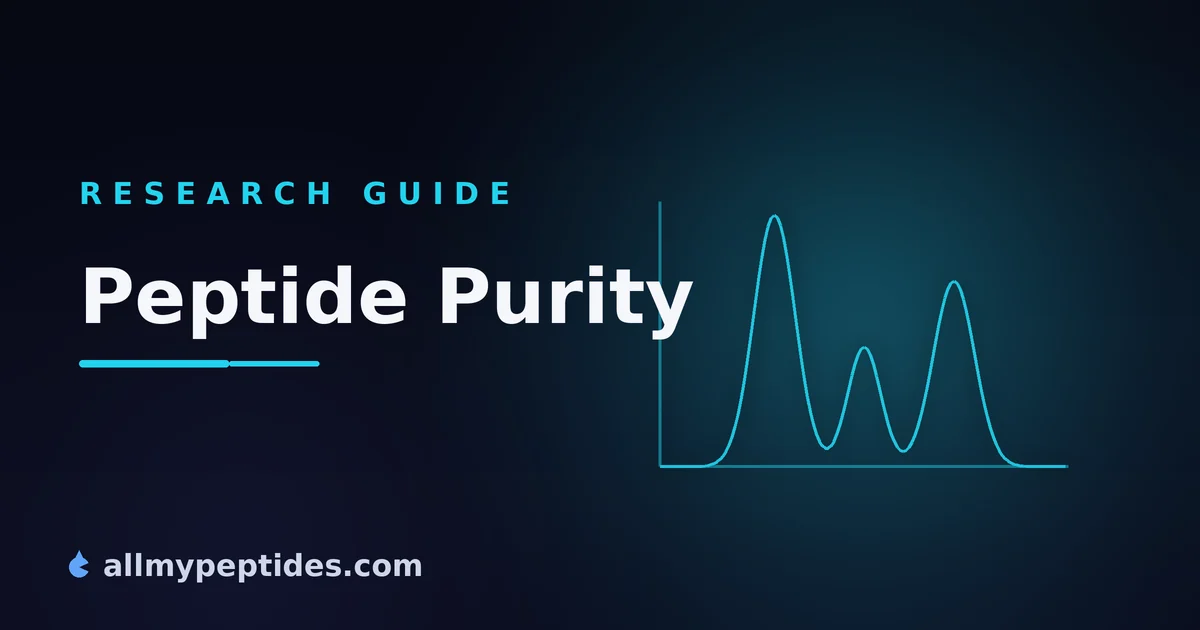
High-performance liquid chromatography separates the components of a sample as they pass through a column, producing a chromatogram made up of peaks. A single large, sharp peak indicates a pure compound, and the area under that main peak is the purity figure quoted on a COA.
HPLC is the standard method for quantifying how much of a sample is the target peptide.
What Mass Spectrometry Confirms
Mass spectrometry measures molecular weight with high precision and matches the measured mass to the expected mass of the peptide, confirming its identity.
The two techniques answer different questions: HPLC tells you how much of the target is present, while MS confirms that it is the correct molecule in the first place.
How to Read a Purity Percentage
Purity is usually stated as 99%+ or 99%+, derived from the main-peak area on the HPLC trace. A reputable COA includes the actual chromatogram, not just the headline number, so the result can be independently checked rather than taken on trust.
The Role of the Certificate of Analysis
A Certificate of Analysis is an independent-laboratory document that records a peptide's identity, purity, the testing methods used and, ideally, the batch number.
A COA that is batch-matched to the exact vial you receive — rather than a generic example — is what separates genuine verification from marketing.
What to Look For Before Buying
Before purchasing, confirm that:
- A COA is available for the product.
- It shows HPLC purity together with the chromatogram.
- It includes mass spectrometry identity confirmation.
- The certificate is batch-specific, not a generic sample.
A supplier who cannot produce a COA for a given batch warrants caution.
Every Retatrutide batch ships with an independent HPLC Certificate of Analysis — see the purity data before you buy.
Shop RetatrutideFrequently Asked Questions
What purity should a research peptide be?+
What is the difference between HPLC and mass spectrometry?+
What is a batch-matched COA?+
Should I trust a purity figure without a chromatogram?+
Related Guides
Products discussed in this guide are for research and laboratory use only. AllMyPeptides does not condone or support misuse of any research materials. Not for human or animal consumption.